
Who Are We?
Auslan for Families was established in July 2020 (initially contracting under Learning for Life Therapy Services in Dunsborough) in response to a clear and growing need within the Southwest region. Families were seeking access to an Auslan teacher, and local services were limited.
We exist to bridge that gap and provide accessible, meaningful language support to those who need it most.


What Makes Us Special?
A Family-centred Approach
Auslan for Families offers individualised, family-centred Auslan programs designed to support Deaf and hard of hearing individuals and their families.
Every family’s journey is unique. Some are navigating a new diagnosis. Others are building confidence with communication at home or advocating within school settings.
Each program is thoughtfully tailored to reflect the goals, priorities, and daily realities of the individual and their support network. We want your support to be practical, responsive, and grounded in real life.
Learning in Natural Environments
Language is most powerful when it is used where life happens. Sessions are ideally delivered within the home, with collaboration across environments that are meaningful to the individual — including day-care, schools, universities, community groups, sporting clubs, and extracurricular activities.
Whether it’s swimming lessons, drama class, surf lifesaving, daily fitness at school, or community sport, support is adapted to ensure Auslan is embedded naturally and confidently into everyday experiences.
Culture and Identity
Auslan is more than a communication tool! It is part of a rich cultural and community identity.
An important component of the program includes cultural awareness and Deaf community education.
Families are supported to understand the historical context, cultural etiquette, and identity development that underpin positive language experiences.
Bilingual and bicultural supports are central to the work of Auslan for Families, equipping individuals to engage confidently within both Deaf and hearing communities.
What Does A Session Actually Look Like?

Sessions are approximately one hour in duration and scheduled at a frequency that suits each family’s needs.
Support may include:
-
Individualised Auslan teaching
-
Family-based language development
-
Cultural awareness education
-
School or community collaboration
-
Development of sensory compensatory strategies
-
Advocacy and confidence-building
Significant care is taken to ensure individuals feel safe, respected, and comfortable within their own environments.
Our Aim is always to:
-
Increase confidence and communication access
-
Reduce barriers in daily life
-
Support identity development
-
Strengthen family connection
-
Promote acceptance, understanding, and inclusion
Above all, the goal is to ensure Deaf and hard of hearing individuals feel confident, capable, and empowered within their communities.
In The Media
Brielle has been featured in a number of media articles and videos, as well as having written papers on her experiences. These, all in different ways show who Brielle is as a person and how she became who she is today. What her journey of hearing loss has been.

Meet Our Director
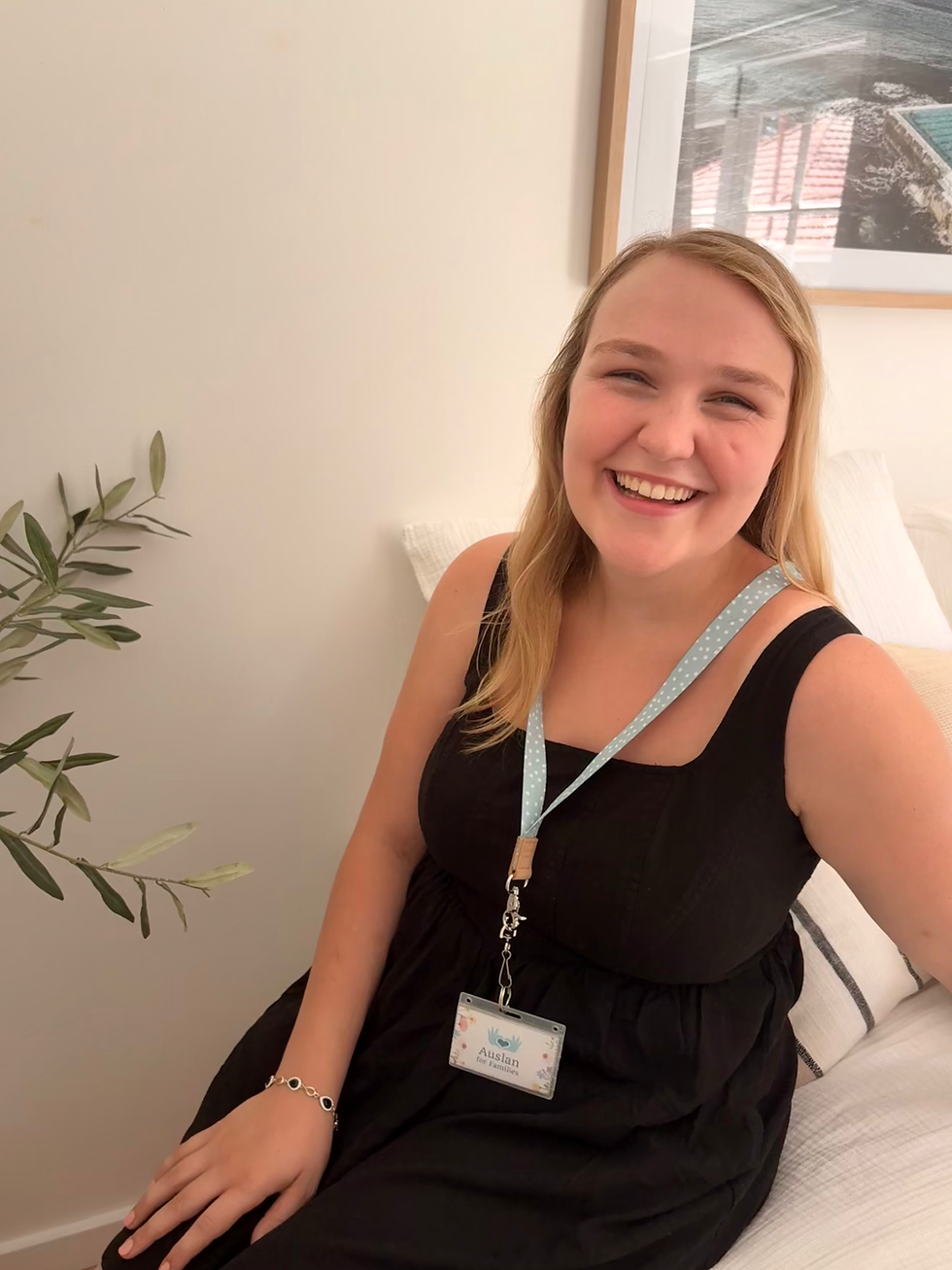
Hi, I'm Brielle, the Director of Auslan For Families. I was born hearing, to hearing parents. Over my childhood I experienced significant hearing fluctuations due to conductive loss, however managed to meet and exceed developmental milestones with the support of over compensatory strategies.
During my teenage years I acquired a rapidly deteriorating hearing loss which resulted in a permanent, severe – profound bilateral mixed, sensorineural hearing loss with a conductive overlap.
During this transition from hearing to Deaf, I rapidly found ways to accept and embrace my diagnosis, adapt to my environment and obtain the necessary supports and strategies required to fulfill my natural born potential in a hearing world, whilst also beginning my bicultural identity within the Deaf community.
Having experienced a hearing world and a Deaf world brings with it a unique outlook, knowledge, and perspective. Most importantly, I am now proud to be bicultural and bilingual.
I have found that my greatest successes have arisen from using a combination of communication means, both verbal and visual in conjunction or isolation, dependent upon the situtation.
This bimodal communication approach enables me to communicate with the whole family. This way, I can quickly and accurately pinpoint existing or emerging barriers, liaise with educational staff to support equal access to the curriculum, and consult with allied therapists to provide insight to the varying intricacies and subsequent functional impacts that an individual with a hearing loss may experience and present with.
Nowadays, I am proud to be an integral part of the Deaf community in the south west region and nothing makes me happier than introducing the joy of Deaf culture and connection with others on this journey.
